
Payroll is one of those things that happens quietly in the background. Until something goes wrong.
A missed payment, incorrect deduction or payroll error can quickly become stressful for employees and create extra work for the business.
During National Payroll Week, we’re looking at what can go wrong, what employers should do about it and how to reduce the risk of it happening again.
Common payroll errors
Payroll involves a lot of information, so mistakes can happen.
Some of the most common include:
- Paying an employee the wrong amount
- Incorrect overtime or bonus payments
- Using the wrong tax code
- Incorrect National Insurance or pension deductions
- Failing to update employee details
- Incorrect holiday pay
- Processing starters or leavers incorrectly
- Missing payroll deadlines
Even a small error can have a knock on effect on an employee’s pay and the information reported to HMRC.
What can go wrong for employees?
For employees, being paid correctly and on time matters.
An underpayment can make it difficult to cover household bills, while an unexpected deduction can leave someone wondering why their take home pay has changed.
There is also the issue of trust.
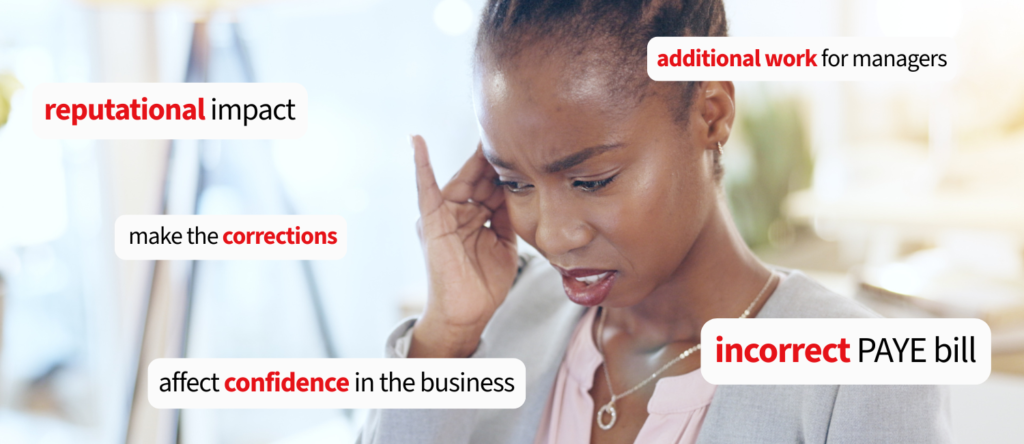
If payroll errors happen regularly, employees may start to lose confidence in their employer’s processes, even when the mistakes are accidental.
What does it mean for the business?
Payroll errors can create more than just an awkward conversation.
Someone needs to investigate what happened, calculate the correct amount, communicate with the employee and make any necessary corrections.
There can also be compliance implications. Incorrect payroll information may need to be corrected with HMRC, depending on the nature of the error.
And if mistakes keep happening, they can start taking up valuable management time.
What should you do when you spot an error?

Don’t ignore it.
Start by finding out exactly what went wrong and who has been affected.
Then:
1. Check the figures
Work out what was paid and what should have been paid.
2. Speak to the employee
If their pay has been affected, explain what happened and what you are doing to fix it.
3. Correct the error
Make sure the necessary payroll and HMRC corrections are completed.
4. Look at why it happened
Was it a one off mistake, or does the payroll process need improving?
Being open and dealing with an error quickly can help prevent a small problem from becoming a bigger one.
How can you prevent repeat mistakes?
Fixing the immediate problem is important, but so is understanding what caused it.
Businesses can reduce payroll errors by:
- Using a payroll checklist
- Having payroll checked before it is finalised
- Setting clear deadlines for payroll changes
- Keeping employee records up to date
- Making sure managers know what information payroll needs
- Regularly reviewing payroll reports
Good payroll is not just about getting people paid. It is about having a reliable process behind it.
Getting payroll right matters
Payroll may be an administrative process, but it has a real impact on people.
Mistakes can happen. What matters is dealing with them properly and having processes in place to reduce the chance of them happening again.