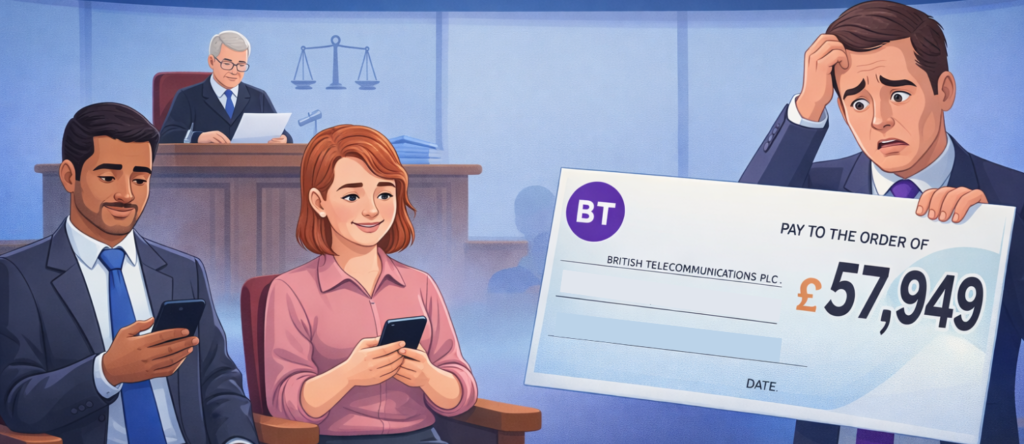
Microsoft Teams, Slack, WhatsApp… workplace communication has changed massively. And with that comes a new kind of risk: messages that are typed quickly, shared in group chats, and later viewed very differently when things escalate.
A recent Dundee Employment Tribunal decision involving British Telecommunications plc (BT) is a good reminder of something employers sometimes forget in the heat of a misconduct case:
- Even if messages are inappropriate, dismissal can still be unfair if the employer gets the process and decision-making wrong.
In this case, two employees were dismissed after comments made in a Microsoft Teams chat. The tribunal ultimately found both dismissals unfair and awarded compensation (over £26,000 to one claimant and over £31,000 to the other).
What actually happened
Two BT employees at the Dundee call centre, Kasam Khokhar and Lynsey Miller, were dismissed for gross misconduct after BT’s corporate investigations team used keyword searches to review Microsoft Teams messages and flagged a chat from 22 October 2024. The transcript included crude, violent “banter” about a colleague (“A”), including “HERE I’D LOVE TO BOOT A FULL FORCE IN THE FANNY”, with replies such as “DOO IT”, and Mr Khokhar’s “SECOND THAT OOPS I NEVER SAID THAT HA HA HA”.
The tribunal noted the chat was team-only, that “A” wasn’t in it, had no access, and there was “absolutely no evidence” she knew about the comments or that any complaint had been made. Both employees were suspended in January 2025, then invited to disciplinary hearings alleging their messages “could be deemed as inciting violence and hate against a fellow BT employee”; both accepted the comments were inappropriate but denied they were trying to incite violence.
BT dismissed them and their appeals failed. While the tribunal agreed the messages were inappropriate, it found both dismissals unfair, criticising BT for approaching the matter with a “completely closed mind” and awarding compensation.
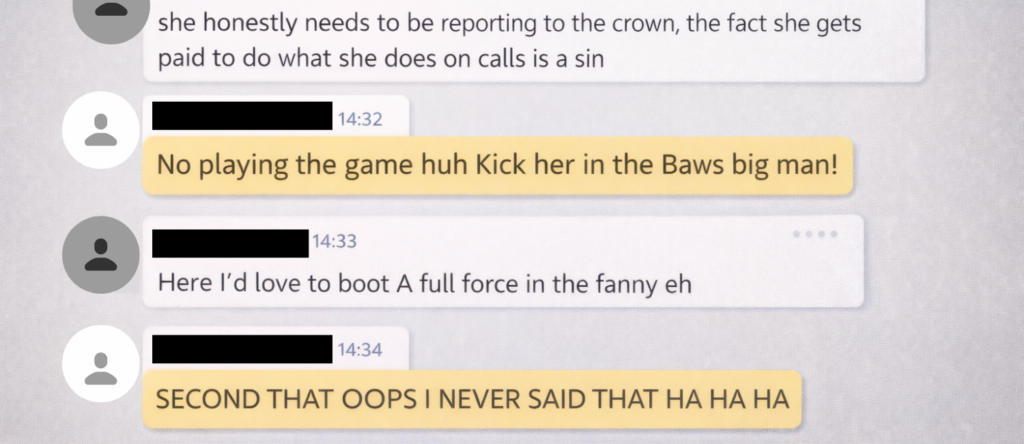
Source: Employment Tribunals (Scotland), adapted by HR Hub Plus.
“Zero tolerance” doesn’t remove the need for judgement
Many organisations include “zero tolerance” wording in policies (bullying/harassment/discrimination, misuse of systems, conduct standards). That language can be useful.
But the tribunal’s message is clear: you still have to apply judgement.
A “zero tolerance” label doesn’t remove the need for:
- clear allegations.
- a reasonable investigation.
- a fair disciplinary process.
- a genuinely open-minded decision maker.
- and a proportionate outcome.
If your process is weak or your decision looks predetermined, you can lose an unfair dismissal claim even when the conduct itself looks bad on paper.
What tribunals look for in digital misconduct cases
One of the biggest risks in chat-message cases is that employers react to the words on a screenshot without stepping back and testing context. Tribunals will often want to know what the full conversation was, who could see it, whether anyone was directly impacted, and whether this was an ongoing pattern or a one-off lapse. That doesn’t mean context becomes an “excuse”, it means context affects what a reasonable employer might do next.
Another common issue is whether expectations were actually clear. If an employer is going to treat certain language in Teams as gross misconduct, it needs to be able to show staff were trained, policies were accessible, and the standard was consistently applied. The judgment in this case places weight on the wider picture around workplace standards and guidance, including the absence of training and the employer’s approach to how digital conduct should be managed.
Finally, proportionality matters. Even where conduct is inappropriate, dismissal won’t always sit within the “range of reasonable responses”, especially where there are alternatives that could correct the behaviour, protect others, and reinforce standards without ending employment. The tribunal found that dismissal was not a fair outcome on these facts.
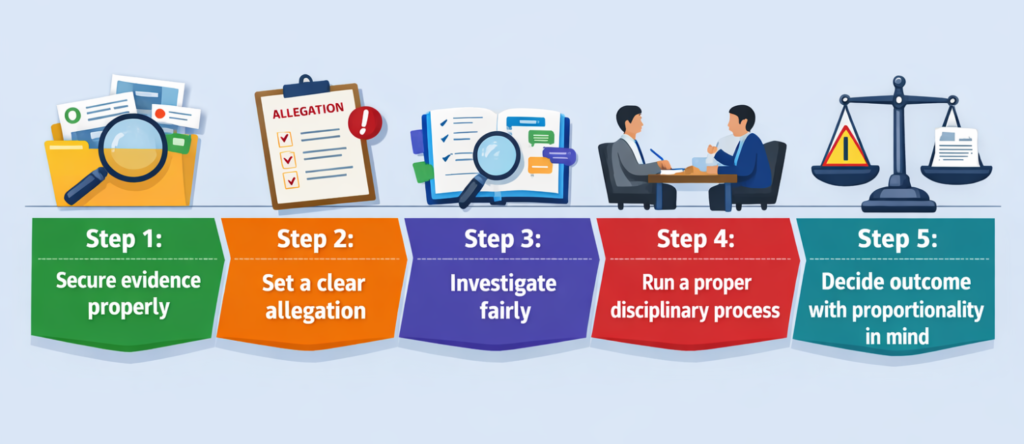
HR checklist: handling inappropriate workplace messages
If an issue lands on your desk tomorrow, here’s a practical approach:
Preventing the problem in the first place
A quick prevention checklist for hybrid workplaces:
- Update your digital conduct/comms policy with real examples.
- Do refresher training on “banter”, protected characteristics, harassment and bullying.
- Set expectations for group chats (including manager conduct).
- Make policies easy to access and acknowledge.
- Encourage safer “pressure valve” options (support channels, EAP, manager check-ins) so venting doesn’t spill into risky spaces.
Need support with a live case?
If you’re managing a disciplinary involving messages, HR Hub Plus can support with:
- investigation planning and questions.
- policy alignment.
- disciplinary letters and documentation.
- ensuring your process is fair, consistent and defensible.