
Sickness absence remains a real challenge for UK employers. According to the latest Office for National Statistics data, an estimated UK employees lost 148.8 million working days because of sickness or injury in 2025. While this was slightly lower than in 2024, it was still 9.8 million days higher than the pre-pandemic level in 2019. On average, this equated to 4.4 days lost per worker during the year.
For employers, these figures are not just numbers on a report. They can mean missed deadlines, extra pressure on remaining staff and disruption to service delivery. They can also lead to difficult conversations that managers may not feel confident handling.
But the answer is not simply to “reduce sick days” at any cost. Employees need to feel able to take time off when they are genuinely unwell. The real issue for employers is whether sickness absence is being managed clearly, fairly and consistently.
Why sickness absence matters for employers
Every business will experience sickness absence. A cold, flu, injury, operation, mental health concern or long-term health condition can affect anyone. The problem often starts when there is no clear process. Employers may not know how to record absence, spot patterns, check in with employees or support a return to work.
For smaller businesses, even one or two absences can have a noticeable impact. The business may need to redistribute work or cover shifts. Customer service may also suffer. Managers may have to make decisions without proper guidance.
The financial impact can also be significant. The government-commissioned Keep Britain Working final report states that each sickness absence day costs employers around £120 in lost profit, creating disruption, lost capacity and unplanned costs for businesses.
This is why sickness absence should not be treated as an occasional admin task. Employers should make it part of a wider HR process. This helps protect the business while supporting employees properly.
The importance of a clear absence process

A clear sickness absence process helps everyone understand what should happen when an employee is unwell. It sets expectations around who the employee should contact, when they should report absence, what information is needed and how the business will manage return-to-work conversations.
Acas states that employers should support workers when they are off work or returning to work, and that absence policies can make clear what is expected from both employers and workers.
This matters because inconsistency can quickly create problems. If one employee is asked to attend a return-to-work meeting and another is not, or if absence concerns are only addressed after they become serious, employers may find it harder to justify their decisions later.
A good absence process should usually include:
clear reporting rules;
accurate absence records;
return-to-work meetings;
guidance for managers;
early intervention where absence patterns appear;
support for employees with ongoing health concerns;
a fair and consistent approach across the business.
Acas also advises employers to be consistent and fair when using absence policies, while allowing flexibility for individual circumstances.
Early intervention can prevent bigger issues later
One of the biggest mistakes employers make is waiting too long before addressing absence concerns. By the time absence becomes frequent, long term or disruptive, the situation can already feel more difficult to manage.
Early intervention does not need to feel harsh or formal. In many cases, it starts with a simple and supportive conversation.
For example, a manager might say:
“We’ve noticed you’ve had a few periods of absence recently, so we wanted to check in and see whether there is anything affecting you at work or anything we should be aware of.”
That kind of conversation can help identify whether the employee is struggling with workload, stress, a health condition, personal circumstances or something else that may need support.
It also gives employers an opportunity to act before the issue escalates. Depending on the situation, this could involve temporary adjustments, a phased return, occupational health advice, a review of duties or further HR guidance.
Long-term health conditions need careful handling
The ONS data shows that employees with long-term health conditions had a sickness absence rate of 4.0%, compared with 1.0% for those without long-term health conditions.
This is an important reminder that absence management should not be treated as a one-size-fits-all process. Where an employee has a disability, long-term health condition or ongoing mental health concern, employers may need to consider whether reasonable adjustments are required.
This could include changes to working hours, duties, workload, equipment, location or the way a role is managed. The right approach will depend on the employee’s circumstances and the needs of the business.
Employers should also be careful not to make assumptions. A supportive, evidence-based approach is usually much safer than reacting informally or inconsistently.
Return-to-work meetings should not be skipped
Return-to-work meetings are one of the simplest but most useful tools for managing sickness absence. They allow employers to check whether the employee is well enough to return, understand the reason for absence, identify any support needed and spot any wider patterns.
Acas advises that when an employee returns to work after being off sick, they should have a return-to-work meeting with their employer. This is an opportunity to make sure the employee is well enough to work and has any support they need.
These meetings do not need to be intimidating. In fact, they are often most effective when they are calm, private and supportive. The aim is not to catch employees out, but to keep communication open and ensure the employer has an accurate record of what has happened.
For employers, the record-keeping side is important too. If absence later becomes a formal issue, clear notes can help show that the business acted fairly and consistently.
Why managers need support
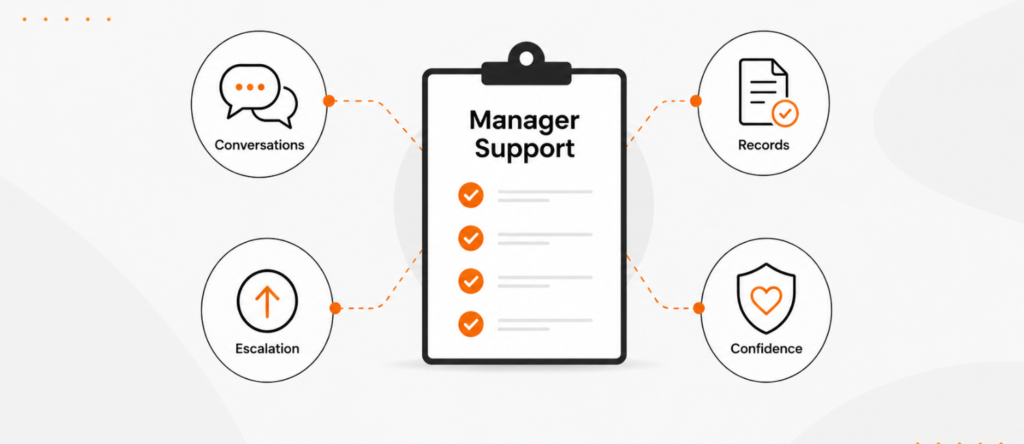
Managers are often the first people dealing with sickness absence, but many have not been trained in how to manage it properly. They may feel unsure about what they can ask, how much detail they should record, when to escalate concerns or how to handle sensitive health information.
This can lead to two common problems.
Some managers avoid the conversation completely because they are worried about saying the wrong thing. Others may approach the situation too informally, without keeping proper records or following a consistent process.
Both approaches can create risk.
Good HR support gives managers confidence. It helps them understand how to have appropriate conversations, when to seek advice and how to balance empathy with the needs of the business.
How HR Hub Plus can support employers
At HR Hub Plus Limited, we help businesses create fair, practical and legally compliant recruitment processes from job adverts and interview templates to offer letters, onboarding and probation support.
Whether you are hiring your first employee or growing your team, getting the process right from the start can help protect your business and give you confidence in every hiring decision.