
For many small and medium-sized businesses in the UK, HR often starts in a spreadsheet.
At the beginning, it works. It’s simple, familiar, and doesn’t require extra investment. When you only have a few employees, it feels manageable, everything is in one place and easy to update. But as the business grows, things start to change.
What once felt organised can quickly become harder to control. Documents get duplicated, updates are missed, and different managers begin handling situations in their own way. Over time, this doesn’t just create inconvenience, it creates risk.
And in today’s UK employment environment, that risk is becoming harder to ignore.
Why spreadsheets stop being enough
Spreadsheets are useful for storing information, but HR is not just about storing data.
It’s about managing processes, making sure contracts are correct, policies are up to date, and decisions are handled consistently across the business.
In the UK, employers are legally required to provide employees with a written statement of employment particulars from day one.
On top of that, businesses need to maintain accurate records, follow fair procedures, and ensure documentation reflects current legislation.
The issue is that spreadsheets don’t support any of this in a structured way. They don’t notify you when something is outdated. They don’t guide managers through the correct process. And they don’t protect you if something goes wrong.
So while everything may look “under control”, important gaps often go unnoticed.
When small gaps become real problems

Most HR issues don’t start with something serious. They start small.
A policy hasn’t been updated. A contract is missing a clause. A situation is handled informally because it feels quicker at the time. Individually, these decisions might seem harmless. But when something escalates, they can quickly become difficult to defend.
Employees in the UK have the right to bring claims to an employment tribunal if they believe they have been treated unfairly. At that point, it’s not just about what happened, it’s about whether the correct process was followed.
Without clear systems and documentation, even well-intentioned decisions can be challenged.
Inconsistency across your business
One of the biggest risks we see in SMEs is inconsistency.
As soon as more than one person is involved in managing employees, different approaches start to appear. One manager may follow a structured process, while another handles situations more informally. Over time, this creates uneven experiences across the business.
From a legal perspective, consistency matters. Treating employees differently in similar situations can increase the risk of disputes, particularly when it comes to grievances or claims of unfair treatment.
Without a clear system in place, it becomes very difficult to maintain that consistency.
The time cost
There’s also a more practical issue — time.
Managing HR through spreadsheets often means:
- searching for documents
- double-checking versions
- manually updating records
- chasing information from different people
These tasks seem small, but they add up quickly.
Instead of focusing on growing the business or supporting employees properly, time is spent managing systems that were never designed for HR in the first place.
Why this matters even more now
With ongoing updates to UK employment law, keeping HR documentation and processes up to date is becoming more important than ever. Guidance is regularly updated on GOV.UK.
The challenge is that manual systems make it easy for things to become outdated without anyone noticing.
A contract that worked last year may no longer reflect current expectations. A policy that hasn’t been reviewed could now be missing key elements. And most businesses only realise this when an issue arises.
A smarter way to manage HR
For many businesses, the issue isn’t effort, it’s the system.
Spreadsheets can only take you so far. As your team grows, you need something more structured, reliable, and easier to manage day to day.
This is where cloud-based HR software makes a real difference.
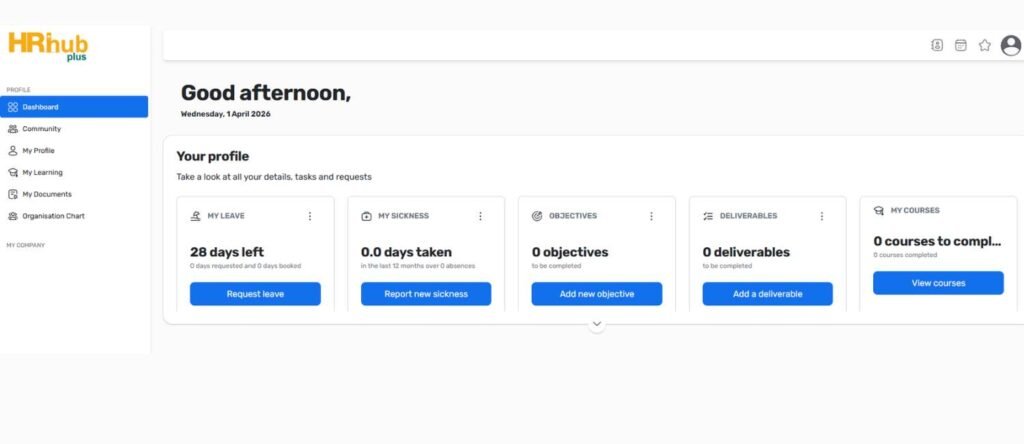
Instead of juggling documents and processes manually, everything sits in one place. Contracts, policies, employee records, and performance management are all organised and easy to access, giving you clarity and control without adding complexity.
In practice, this means less time spent on admin and fewer things slipping through the cracks. Employees can manage their own information, leave and absence can be tracked in real time, and managers have clear processes to follow when handling situations.
Just as importantly, it helps ensure your documentation stays aligned with current requirements, reducing the risk of issues later on.
Want to see a better way of managing HR?
If you’re still managing HR in spreadsheets, you’re not alone. It’s where most businesses start.
But as your business grows, it’s worth asking whether that system is still supporting you or quietly creating risk in the background.